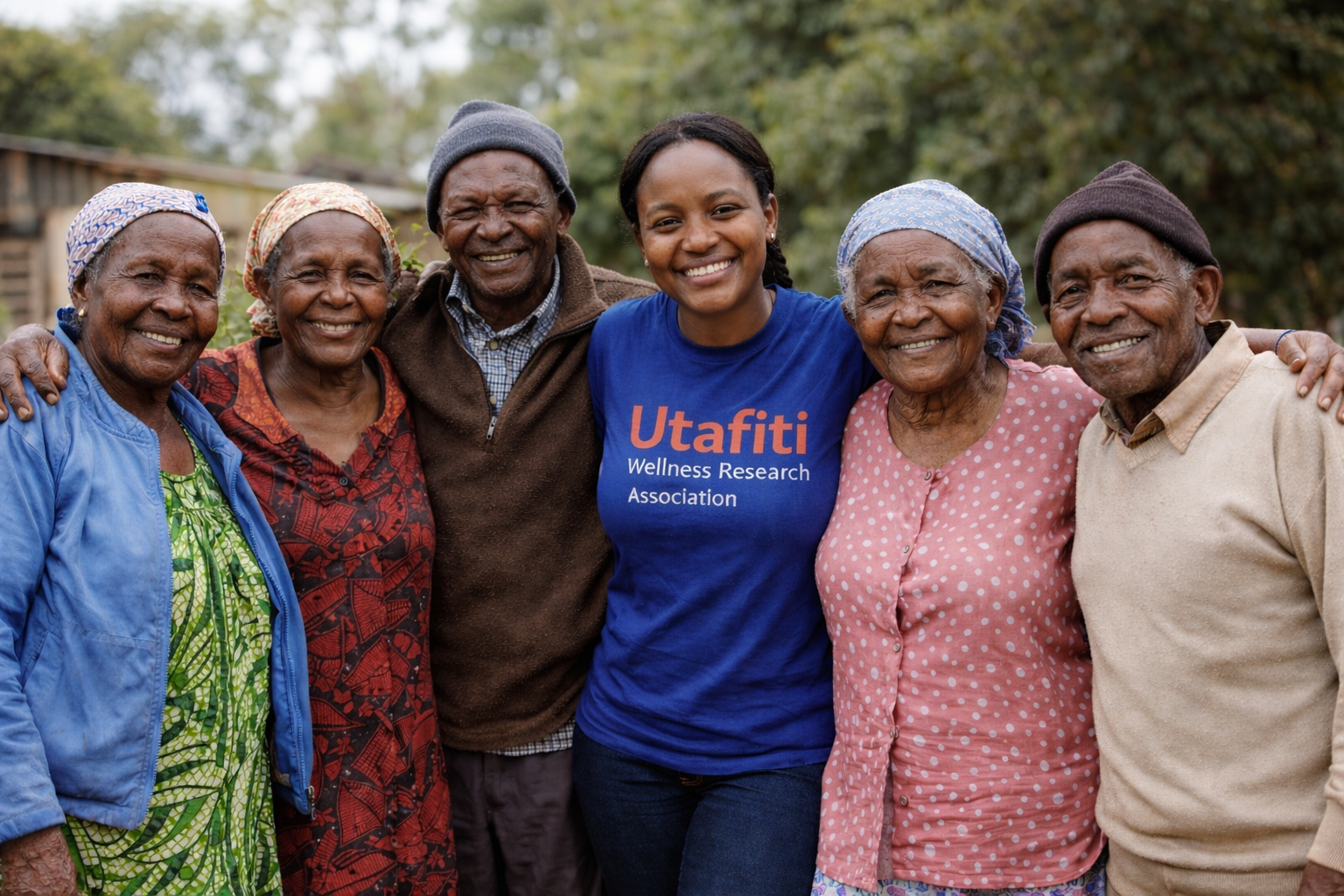
From Evidence to Impact
The ElderCare Initiative represents Utafiti Wellness's flagship translational research program. Rather than a traditional charity model, we operate as a translational research hub—taking validated findings from peer-reviewed gerontological studies and adapting them into culturally appropriate, cost-effective interventions that can be implemented and scaled across Kenyan communities.
Our seven mini-programs each address a critical determinant of healthy aging, from fall prevention and cognitive health to nutrition security, social connectivity, and elder abuse prevention. Every intervention is grounded in published research, monitored for effectiveness, and iteratively improved based on community feedback and real-world data.
Our Seven Research-to-Action Mini-Programs
1. Falls Prevention & Mobility Innovation Lab
📊 Evidence: WHO Global Report on Falls Prevention 2021 | CDC STEADI ToolkitResearch Translation: Adapts WHO's STEADI (Stopping Elderly Accidents, Deaths & Injuries) toolkit for low-resource Kenyan settings. Trains community health workers to conduct comprehensive home hazard assessments, lead group balance exercises, and provide low-cost assistive devices.
Innovation: Locally fabricated balance assessment tools using available materials; peer-led "Walk Strong" exercise groups; home modification kits using recycled materials; mobile-based fall incident reporting system.
📈 Projected: 45% reduction in fall-related injuries among participants2. Cognitive Health & Dementia Care Navigation
📊 Evidence: Lancet Commission on Dementia Prevention 2024 | WHO iSupport for DementiaResearch Translation: Implements Cognitive Stimulation Therapy (CST) protocols proven to slow cognitive decline by 20-30%. Establishes dementia care navigation services that guide families through diagnosis, care planning, and support resources.
Innovation: Culturally adapted CST materials in local dialects; mobile-based caregiver support groups and training; memory screening integrated into routine health visits; "dementia-friendly community" certification program.
📈 Projected: 30% improvement in cognitive function scores; 40% reduction in caregiver stress3. Nutrition Security & Food Innovation Hub
📊 Evidence: KEMRI/Wellcome Trust Nutrition Studies 2022-2024 | WHO Nutrition Guidelines for Older PersonsResearch Translation: Translates nutritional epidemiology findings into practical, affordable meal plans optimized for older adults' metabolic needs. Establishes community-based "food innovation groups" that produce fortified complementary foods using locally available ingredients.
Innovation: Locally sourced, shelf-stable nutrient-dense sachets (millet-iron, amaranth-zinc blends); intergenerational cooking workshops; bio-intensive kitchen gardens designed for limited mobility; bulk buying cooperatives.
📈 Projected: 40% reduction in malnutrition risk; 25% improvement in hemoglobin levels4. Chronic Disease Self-Management Collaborative
📊 Evidence: Stanford Chronic Disease Self-Management Program (CDSMP) - Kenyan Adaptation | WHO HEARTS Technical PackageResearch Translation: Adapts evidence-based self-management programs for hypertension, diabetes, arthritis, and respiratory conditions to local contexts. Peer-led workshops on medication adherence, symptom tracking, and lifestyle modification.
Innovation: Paper-based symptom trackers with pictorial guides for low-literacy participants; integration with community health promoters for follow-up; simplified treatment algorithms for CHWs; peer support circles organized by condition.
📈 Projected: 35% improvement in blood pressure control; 30% reduction in hospital readmissions5. Social Prescribing & Intergenerational Innovation
📊 Evidence: UK Social Prescribing Research | Global Ageing Studies | WHO Social Isolation FrameworkResearch Translation: Implements social prescribing models where healthcare providers prescribe non-clinical interventions: community activities, mentoring programs, skill-sharing with youth, and participation in cultural events.
Innovation: "Grandparent-Grandchild Tech Buddies" program bridging digital divide; community asset mapping to identify social resources; "Elder Wisdom" oral history project; community navigators who connect elders to local activities.
📈 Projected: 50% reduction in social isolation scores; 35% improvement in mental wellbeing6. Elder Abuse Prevention & Legal Empowerment
📊 Evidence: WHO Global Status Report on Preventing Violence Against Older People 2024 | Kenyan Protection of Older Persons Act 2023Research Translation: Translates epidemiological findings on elder abuse prevalence and risk factors into community-based prevention strategies. Trains elders, families, and community leaders to recognize, report, and respond to abuse (financial, physical, emotional, neglect).
Innovation: Paralegal training for older adults; community-based elder protection committees; mobile-based anonymous reporting hotline; integration with county social protection systems; will-writing and asset protection workshops.
📈 Projected: 50% increase in reported cases addressed; 30% reduction in financial exploitation incidents7. Sensory Health & Assistive Technology Access
📊 Evidence: WHO World Report on Hearing 2021 | IAPB Vision Atlas 2023 | Lancet Healthy Longevity Sensory Impairment SeriesResearch Translation: Implements community-based hearing and vision screening protocols adapted from WHO guidelines. Provides low-cost assistive devices and trains older adults in their use and maintenance.
Innovation: Peer hearing aid maintenance workshops; "Vision Champions" trained to conduct basic eye screenings; refurbished eyeglasses distribution program; partnerships with local optometry schools for outreach clinics; sensory-friendly home modifications.
📈 Projected: 10,000+ individuals screened; 5,000+ provided with corrective devicesOur Research Translation Pipeline
Evidence Synthesis
Review peer-reviewed research, global guidelines & Kenyan epidemiological data
Contextual Adaptation
Co-design with elders, caregivers & community stakeholders through participatory workshops
Pilot Implementation
Test interventions with rigorous monitoring, mixed-methods evaluation & iterative refinement
Scale & Advocate
Package evidence-based models for county adoption, policy integration & national scaling
Support Evidence-Based Elder Care
Your investment helps translate cutting-edge research into life-changing interventions for Kenya's older adults. Each of our seven mini-programs is designed for scalability, measurable impact, and sustainable integration into county health systems.